« Older Entries | Newer Entries »

Annual MLISSA AGM Tonight!

Important Reminder: the MLISSA AGM is tonight (Monday), at which we will be discussing topics which will greatly affect the financial future of SIS. If scholarships and grants, trips and social events, and association funding are topics that matter to you, I strongly suggest you attend.

Education Building
Room 129
5:30pm

Thoughts on Internet Distraction

By Jacob Siefring

In June, 2010, W.W. Norton published The Shallows: What the Internet Is Doing to Our Brains, by Nicholas Carr. Because I frequently read book reviews, I was aware of and interested in this book for some time before I got around to it. What gave me a sense of urgency to read it was seeing Jonathan Safran Foer’s high praise of Carr’s work. He basically called it the book of the year. The book develops ideas advanced in Carr’s article, “Is Google Making Us Stupid?”, published in The Atlantic (Jul-Aug. 2008). Before that, Carr published two books on technology, notably Does IT Matter? Information Technology and the Corrosion of Competitive Advantage and The Big Switch: Rewiring the World, From Edison to Google. He’s a former executive editor for the Harvard Business Review.

Carr believes — and shows, using lots of evidence drawn from research in neuroscience and cognitive science (the book is shelved in McGill’s Osler medical library) — that our interlinked computing technologies pose a serious challenge to deep thought, hampering our capacity to reflect and contemplate in meaningful ways. This isn’t exactly a groundbreaking claim; at least, not for anyone who has had the experience of, while piloting a web browser, being unable to focus for any length of time on the task at hand, or who has found their attention increasingly diverted and distributed through a web of hyperlinks. Figures of speech to describe our computerized, information-saturated mental state abound: popcorn brain, mental obesity are among the most apt. Forget information overload.

I think we’ve most all of us felt an inkling of suspicion that web use might influence thought patterns and micro-behavior. Why Carr’s book is important is because it culls together enough scientific research, present-day information, and historical context to show us that — beyond the shadow of a doubt — the net is rewiring our neural circuitry and impairing our intelligence (that is, at least insofar as high-level intelligence used to mean the ability to grapple with and dissect complex problems, as well as to remember lots of information). If you’re skeptical of this claim, I encourage you to read Carr’s book. Nevertheless, for the hurried, here are a few of what I retain as its most salient points.

  • Developers of automation-technologies and decision support systems are often motivated by the desire to relieve ordinary people of the burden of executing routine, mundane tasks. They want to make life easier for everyone; so, they advocate outsourcing decision-making to computers and the writing of algorithms to assist in search retrieval (namely, Google’s PageRank). These evangelists of technology often share the view of Wired writer Clive Thompson, who refers to the Net as an “ ‘outboard brain’ that is taking over the role previously played by inner memory. […] He suggests ‘by offloading data [from our brains] onto silicon, we free our own gray matter for more germanely “human” tasks like brainstorming and daydreaming’ ” (Carr 180). But this conception of the brain, and the well-intentioned idea that technology will allow our thoughts to become more serene and lofty, are dead wrong, Carr shows. Unlike a computer, the human brain does not have a limited storage capacity; experts on memory affirm that “the normal human brain never reaches a point at which experiences can no longer be committed to memory; the brain cannot be full.” “The amount of information that can be stored in long-term memory is virtually boundless” (192).
  • We tend to forget that our interaction with technology is always bidirectional, not just unidirectional. Human intentions may determine behavior, but, as Carr reminds us, tools and media exert a powerful shaping force on consciousness and behavior — especially once they become dominant or integrated into daily routines. This is well summed up in John Culkin’s formulation, “We shape our tools, and thereafter they shape us.” And every tool, every medium has its specific limitations — from the map, to the typewriter, to the power loom, to the clock, as Carr shows (209-211). The searchable internet’s limitations include its isolation of facts and information from their various contexts; and the sprawling, heterogeneous character of the information that’s found there. But enough.

For Carr’s critics, his points are bitter pills to swallow, and many have dismissed them outright. His argument has been called “defeatist” and “reductionist.” From my personal experience, I tend to agree with Carr. The internet has changed the way we think, and, for the most part, not for the better. But at least there’s good news. Exposure to Carr’s book has made me more self-aware of my overuse of the internet and of its insidious effects on my thought patterns. Since having read The Shallows, I’m less inclined to take a laptop with me now when I go out. Even as I write this, I have used the internet-restrictive application Freedom (available for a free five-use trial period!) to curb my forays into the hyperlink jungle, where my thought wanders away and my will atrophies. I think I can even hear myself think. Can you? Hear me? Hear yourself think? Not get distracted?

Role models for librarians

By Jacob Siefring

Do you know “Dead Germans and the Theory of Librarianship” by Sydney Pierce? It was listed as a required reading on the Information and Society fall 2011 syllabus. The short journal article’s point was this: LIS doesn’t have a distinctive, illustrious, or particularly rich history. It’s here, there, and everywhere. It’s a field with roots in many other distinct areas of inquiry. And, indeed, it’s a field that only really came into its own towards the start of the last century.

This is in contradistinction to the humanities and social sciences. Whereas the theoretical foundations of such fields as sociology, psychology, and philosophy are bolstered by sets of writings (respectively, to cite the key reference points, those of: Weber and Simmel; Freud and Jung; Hegel, Kant, Nietzsche, and Benjamin) that provide a common ground covered by students everywhere, forming a large chunk of the core curriculum, the historical foundations of LIS are often summed up in a single lecture during a given course, with little depth or context provided.

Of course, LIS does indeed have a rich history that should receive our attention. What prevents that history’s investigation is that it would mean countless furloughs and tangents into other disciplines, and into the past, not the future, where everyone likes to believe we are heading. Anyways, this blog can be used as a place to draw attention to areas of interest, historical or otherwise, that may be left out of course curricula. (I hope to do so shortly with a discussion of Nicholas Carr’s The Shallows: What the Internet Is Doing to Our Brains, so check back if you’re interested.)

But back to Pierce’s article. By asking head librarians and LIS profs for suggestions regarding who the “dead Germans” of LIS might be, Pierce kept hearing the following names mentioned on numerous occasions:

John Cotton Dana;

Ralph Shaw; and

Jesse Shera.

At least ten other names were dropped, but none besides these three received a double or a triple mention. If you’re in the librarianship stream, you might have already heard about these three guys in detail. If you don’t know them, have a glance at their Wikipedia entries. Their biographies are interesting, and their efforts to advance their professions and society are admirable. Even if their writings aren’t listed on any syllabus (or are they?), these dead Americans deserve a mention and maybe even a read.

MLISSA MOVIE NIGHT TOMORROW

Date: Thursday, December 1, 2011

Time: 7:00 pm- 10:00 pm

Place: Education 216

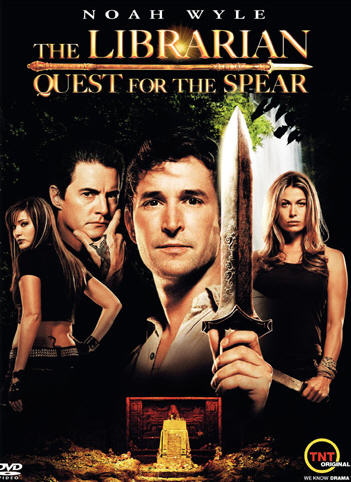
Showing: The Librarian: Quest for the Spear (starring hunky Noah Wyle)

Advice from a Texan Yankee in McGill’s Library Court

Whoa! It’s the last piece of advice from Dr. Cook! Big thanks to Justin Soles for this great article! Make sure to read the rest of the series in the posts below. What do you guys think? Anyone surprised by any of these tips? Leave comments!

By Justin Soles  

5. Expect to Work Hard!

Dr. Cook credits her success both as a library administrator with 30 years of experience at Texas A&M, and as a researcher associated closely with the internationally-renowned LibQual evaluation system, to her work ethic: “There’s no success that didn’t come from hard work.” Dr. Cook stressed that landing a job in a library, archive or information center is just the first step in your career and that those of us who will go the farthest in the profession will also be the ones who work the hardest in making the most of their opportunity.

Dr. Cook pointed to her own experience advancing through the ranks of the Texas A&M library system as evidence. Even when she was faced with a job that wasn’t particularly interesting or challenging, she tried to learn as much about that particular field and/or department as possible. This information became invaluable later once she moved into management, since she had in-depth knowledge of what every library department did, how it worked and who in it did (or didn’t) work hard .

Although Dr. Cook feels that the future in librarianship is bright, she cautioned that you will inevitably face certain challenges and have disappointments in your career. When these happen, she suggested that you need to accept them and move on by keeping them in perspective: just as rain clouds are always followed by sunshine, the disappointments you’ll face in our career will be followed by professional successes that may take you places that you never expected to go!

Advice from a Texan Yankee in McGill’s Library Court

By Justin Soles

Guys, we’ve got 80% of Dr. Cook’s advice! That’s like an A- or something! Check in at the end of the week for the final instalment of the Advice from a Texan Yankee in McGill’s Library Court series.

4. Care About Your People

Although it’s somewhat clichéd, a library is more than a static collection of books: it is also a collection of people, including librarians, cataloging technicians, shelvers, webmasters, desk staff and possibly library volunteers. Although this group may sometimes act like a dysfunctional family, Dr. Cook pointed out that your people skills are just as (if not more) important to the smooth functioning of a library, archive or information center as your technical and managerial skills.

In terms of the ‘soft-skills’ worth developing, Dr. Cook suggested focusing on effectively listening to your staff and users. She also recommended getting out of your office to regularly meet your staff and users in their “homes” since neither of these groups will actively seek you out until a crisis has developed.

However, the most important soft-skill that Dr. Cook feels that librarians must have can be the most difficult to maintain: caring genuinely about your staff and showing them that you do care about them as people. As anyone who’s taken Information Agency Management (GLIS 620) learns, factors like union rules/collective agreements, arguments and grudges over promotions, budget/staff cuts, flextime benefits and holiday/vacation schedules can affect library staff and lead to a toxic work environment. Regardless of the day-to-day struggles and problems, Dr. Cook pointed out that at the end of the day “…you really do have to care about your people…you just can’t fake this stuff.”

LWB: Donate books to a school in Haiti!

LWB McGill is looking for books to donate to a high school in Haiti. A professor from the Education Department at McGill is working with the faculty at this school, it came to our attention that they have no library to support their students! This professor is going to Haiti in December with two PhD candidates and they are bringing donated materials with them.

Materials that would be of the most use are French language books at a high school reading level. Specifically textbooks, or materials concerning the Caribbean are of particular interest. Please, used books are great, but only high quality, current materials! Please contact mcgill@lwb-online.org.

Thanks!

#21 SIS Kids Are Doing It For Themselves: Meet Alex!

1. Name: Alex Amar

2. Year: MLIS II. Or 2011. Or 2012. It depends on what the question means…

3. Stream: Knowledge Management

4. Hometown: Boston. Or Montreal. Or Ottawa. It depends on what you mean by hometown…

5. What is your favourite book? I’m not sure, but I think I’ve memorized-by-osmosis The Demon-Haunted World: Science as a Candle in the Dark and Inherit The Wind.

6. Do you own an eReader? If so, is it cool? No, which is how I know they are.

7. If you weren’t in library school, what would you be doing RIGHT NOW? Probably eating lunch. Oh, and I’d probably have pursued Communications into a MA… or gone to Law School… or drifted into some kind of media consultation/research or broadcasting in Ottawa.

8. What is your dream job? Pundit. Professor of film studies. Curator of a collection of pulp and B-movies. Something at LEGO. ALL AT ONCE.

… that said, I really like my current job, as a Library Assistant at the Royal Victoria Hospital.

9. What is your dream sandwich? Delicious and emotionally fulfilling. Also, it would probably feature garlic and Morbier.

10. What is your favourite thing about living in Montreal? The sense of danger in the winter. The soft glow and smell of fresh-fallen snow. The weird little sub-cities.

11. Living or dead, who would be at your imaginary potlatch? 2000 CHOM L’Esprit winners Pigeon-Hole, Patrick Stewart, my high school debating coaches, Dan Harmon, Grant Naylor, Nick Offerman, John Woo, Stan Lee, Allie Brosh, Nick Cave, Randall Munroe, and friends from SIS.

Advice from a Texan Yankee in McGill’s Library Court

By Justin Soles

This piece of advice from McGill’s Trenholme Dean of Libraries, Dr. Colleen Cook, is the third of five. Be sure to check out what else Dr. Cook has to share with us fledgling professionals in posts below!

3. Be Prepared to Make Decisions

Dr. Cook reiterated what Prof. Bouthillier said during SIS orientation: regardless of where you work or what you end up doing, you will be expected to make decisions. Although this might sound scary, Dr. Cook provided the following advice regarding decision-making:

  • Not making a decision is the same as making a decision…and the worst-case scenario might be to leave things as they are.
  • If you make a decision and it turns out to be wrong, be prepared to admit that you were wrong and then make it right.
  • No decision is permanent; you can always undo a decision that you made.
  • Regardless of the magnitude of the decision, always strive to avoid “doing harm” to anyone, including your users, your staff and yourself!

Dr. Cook also provided some advice about developing your own decision-making style. In her case, she watched how leaders at Texas A&M made their decisions (both good and bad), and was also challenged by her peers when it came to her own decisions. As a result, Dr. Cook’s decision making style is inclusive: she’ll listen to as many views as possible so her decision will be based on what she has heard tempered against her experience. If it turns out that the decision was wrong, she’ll admit it and then try to undo it.

Although Dr. Cook had the benefit of working with and learning from some great leaders, her advice regarding decisions is best summed up as follows: “There’s no decision in a library that can’t be undone…except maybe the amount of steel in the walls. And even then, you can always add to the [building’s] load-bearing capacity.”

Advice from a Texan Yankee in McGill’s Library Court

By Justin Soles

This piece of advice from McGill’s Trenholme Dean of Libraries, Dr. Colleen Cook, is the second of five. Thank you to Justin Soles for sharing this wonderful information! Check out Dr. Cook’s first tip and then stay tuned for more this week!

2. “Learn to Add!”

Dr. Cook notes that financial management is one of the most critical functions within a library: it’s what maintains the collection and allows services to be offered by the library, archive or information center to its users. Yet, she feels that financial management, budgeting and negotiation skills don’t seem to be taught well (if at all) to aspiring librarians today.

Dr. Cook’s admonition above (yes, that’s a direct quotation) is meant to help you avoid “… getting bamboozled…” by salespeople and vendors in the library industry. Knowing your library or information center’s revenues and expenses will help you focus on what is important and also provide some perspective when it comes to assessing the relevant importance of different projects. As Dr. Cook says, “The number of zeros…matters. A $300 expense is different from a $3,000 expense, which is altogether different from a $30,000 or $300,000 expense.”

Although Dr. Cook’s advice was focused mainly on library expenses, she also touched on fundraising as a revenue source, which is especially important in a University library. She said that although fundraising was a tiring and something thankless job for library managers, it could also be very rewarding: “…when the opportunity is right, it’s a win-win situation. The library wins and the donor gets the feeling that they’ve donated to something bigger than themselves.”

Advice from a Texan Yankee in McGill’s Library Court

By Justin Soles

When you enter Dr. Colleen Cook’s office, you are struck by a sense of order. Not the hurried “I’ve-got-someone-outside-the-door-my-place-is-a-mess-and-I-need-to-cleanup” order, nor the anal-retentive order imposed by someone who ensures that their desk materials are separated by a maximum tolerance of 0.5mm. No, the unhurried order evident in Dr. Cook’s office is more subtle and belies her organized mind and her long experience in keeping things organized – which is exactly what you would expect from McGill’s newest Trenholme Dean of Libraries.

However, after talking to Dr. Cook for a few minutes, you might be surprised just how totally at home this transplanted Texan seems here in Montreal, especially considering the majority of her 30 years of experience were spent at one of her alma-maters, Texas A&M University. And the more you talk to her, the more you see that this familiarity is born from a deep wellspring of experience that we fledgling librarians, archivists and knowledge managers can all benefit from.

It was the exciting prospect of drawing on this experience that lead me to meet Dr. Cook to discuss her life and career, as well as to get some advice for those of us thinking about possible careers in our field. Dr. Cook was very generous in sharing with me some of her stories, experiences and thoughts, which I’ve distilled into the following five points. Although Dr. Cook cautioned me that her experience and advice was generally limited to academic libraries (and large university libraries, at that), there is something all of us can relate to and take away from Dr. Cook’s observations and experience.

1. Be Prepared to Move Around

Though Dr. Cook advised that “I would never recommend anyone follow my career path”, her first piece of advice was that you should be prepared to move around, both in terms of moving between different libraries/archives/information centers, as well as moving around within an organization. She explained that this type of experience allows you to see how things are done elsewhere so you can get ideas and see what works and what doesn’t in practice.

For example, Dr. Cook spent time early in her career working with library directors who had “…particularly liberal views on how to run libraries…” and wanted to experiment. Although not all of the experiments worked out, these experiences showed her what library management theories did and didn’t work when they were put into practice.

Similarly, Dr. Cook took advantage of opportunities to move laterally within the Texas A&M library system to learn the various parts of the organization and see how they worked together. Although this didn’t translate into a stable work situation, she credits this strategy with helping her learn most of the parts of the university’s library operations and preparing her to take the reins when she became Dean.

Dr. Cook has 4 more pieces of advice for fresh information professionals, so stay tuned! 

#20 SIS Kids Are Doing It For Themselves: Meet Veronica!

1. Name:
 Veronica Ramshaw

2. Year: MLIS I

3. Stream: Librarianship

4. Hometown: Guelph, ON

5. What is your favourite book?
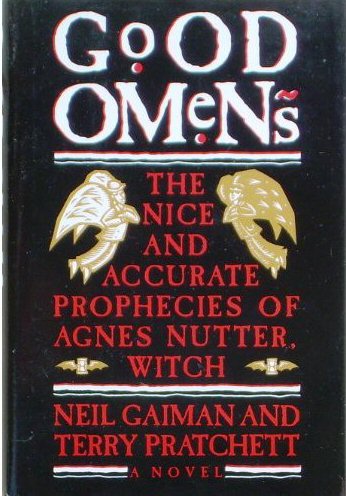
 My favourite book of all time is Good Omens by Neil Gaiman and Terry Pratchett. However, I have quite a love for pretty much anything written by Douglas Adams, and Jane Eyre wins out in the category of Classics.

6. Do you own an eReader? If so, is it cool?
 I have an iPad app with a few too many eReader apps… Kindle, Stanza, iBooks… and so far, all the books I’ve got on it are ones I also own. I’m actually reading Game of Thrones in hard copy and on my iPad right now, reading from one when I don’t have the other.

7. If you weren’t in library school, what would you be doing RIGHT NOW? I would still be trying to find work in film production in Montreal. It’s notoriously difficult to get your foot in the door of the film production industry, and all my networking would help in Toronto or maybe even LA, but not here.

8. What is your dream job? My Dream Job would be film and media librarian/archivist at the NFB, a film company or with a tv network.

9. What is your dream sandwich? I have been eating so many of La Prep’s Chicken Pesto sandwiches you’d think that was my dream sandwich! But no, I’m not very adventurous when it comes to sandwich making (pasta making on the other hand…) so my dream sandwich is really just a good tuna melt.

10. What is your favourite thing about living in Montreal? History so old it’s practically palpable. Not exactly a feeling you get in Guelph or Toronto… also, I love living somewhere that actually gives me an opportunity to use my french on a regular basis!

11. Living or dead, who would be at your imaginary potlatch? Terry Pratchet, Neil Gaiman, Douglas Adams, Freddie Mercury, Joss Whedon, my fiance and both of our families.

Also, check out my blog!

#19 SIS Kids Are Doing It For Themselves: Meet Katharine!

1. Name:
 Katherine van der Linden

2. Year: 
MLIS I

3. Stream: 
Librarianship

4. Hometown: Ottawa

5. What is your favourite book?
 
That’s a tough question…the one I read when I need to cheer up is Diana Wynne Jones’ book Conrad’s Fate. For the best book I’ve ever read, it’s a tie between  Mountains Beyond Mountains: The Quest of Dr. Paul Farmer,  A Man Who Would Cure the World by Tracey Kidder and Three Day Road by Joseph Boyden.

6. Do you own an eReader? If so, is it cool?
 No, but I keep entering contests which offer one as a prize in the hopes that I will win eventually. I’m convinced that if I spend my own money to buy one I will lose or break it, so it’s safer to stick to paper.

7. If you weren’t in library school, what would you be doing RIGHT NOW? Most likely I would be touching up my resume. There aren’t too many positions out there for recent graduates with an undergrad degree in international development…

8. What is your dream job? I wanted to be a Canada Parks Ranger up until the point where I realized I hate bugs (especially mosquitoes) and get cold every time the temperature dips below 15 degrees Celsius. My current dream is to be a librarian in a rural area in Canada or in the developing world or to work overseas.

9. What is your dream sandwich? I enjoy most sandwiches, but right now I’m craving a Panini BLT like the one I had at the Atwater Market a few weeks ago.

10. What is your favourite thing about living in Montreal? The bike paths and the multiculturalism. I love counting the number of languages I hear while I’m out running errands.

11. Living or dead, who would be at your imaginary potlatch? All my friends and most of my family, Rick Mercer, John Cleese, Rowan Atkinson, Terry Pratchett, and Matt Smith. It would make an amazingly funny party!

#18 SIS Kids Are Doing It For Themselves: Meet Marie-Eve!

1. Name:
 Marie-Eve Barrette

2. Year: 
MLIS II

3. Stream: 
KM

4. Hometown: Châteauguay, QC

5. What is your favourite book?
 
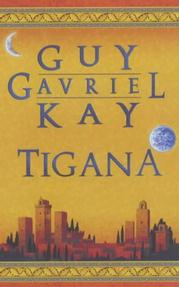
Tigana by Guy Gavriel Kayor Elisabeth Vonarburg’s Chronique du pays des mères if I get to choose a series and not just one book.

6. Do you own an eReader? If so, is it cool?
 Nope. I love the feel and smell of used books too much

7. If you weren’t in library school, what would you be doing RIGHT NOW? Having a life. But most likely still doing laundry…

8. What is your dream job? 
In a middle of nowhere, collecting data on an endangered language and trying to get killed or arrested/banned from the country.

9. What is your dream sandwich?Ice cream!!!!

10. What is your favourite thing about living in Montreal? 
The parks and not needing a car to get everywhere.

11. Living or dead, who would be at your imaginary potlatch? I seriously don’t know. But it would definitely include John Frusciante.

#17 SIS Kids Are Doing It For Themselves: Meet Meg!

1. Name: Meg Gray

2. Year: It’s currently 2011

3. Stream: KM with a side of librarianship

4. Hometown: Vacationland

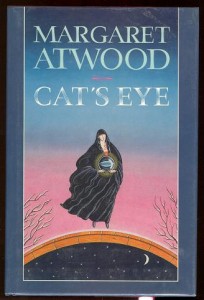
5. What is your favourite book? Hmm…I don’t really have a favorite. Margaret Atwood’s Cat’s Eye is the only book over 20 pages long that I’ve read three times. You can borrow it from me if you want.

6. Do you own an eReader? If so, is it cool?  I don’t own an eReader, but I do have a Talk Boy in my Dad’s basement.

7. If you weren’t in library school, what would you be doing RIGHT NOW? I certainly wouldn’t be procrastinating on a Sunday afternoon. I’d probably be riding my bike and picking apples.

8. What is your dream job?  It changes from day to day, but I what I really want is to look forward to going to work in the morning (or at least not dread it) and feel like I’m doing good. Ideally, I would work in an urban environment Sept-May and then I would spend the summers on the Maine coast where I would have an art studio and an amazing garden. I would make beer and jam and have lots of outdoor dinner parties.

9. What is your dream sandwich? California BLT.

10. What is your favourite thing about living in Montreal? Getting carded every time I try to buy alcohol. Oh, and I love the people, the food, the dramatic seasons and how casual the population is about their late night gravy consumption.

11. Living or dead, who would be at your imaginary potlatch? (This is a weird question, Emily. How in the heck did you come up with this?) Alice Waters, Julia Child, John Waters, Ira Glass, my 11th grade English teacher, Dr. Fred Jones, Wayne and Garth.  We’d have a picnic and play duck, duck, goose.

SLA/LWB SOCIAL

EVERYONE GO TO THE SOCIAL ON THURSDAY NIGHT. TICKETS ON SALE IN CLASS NOW BUT PROBABLY ALSO AT THE DOOR. $5! IL MOTORE! AWESOME O’CLOCK.

(Sorry for yelling.)

#16 SIS Kids Are Doing It For Themselves: Meet Christine!

1. Name: Christine Smith

2. Year: MLIS I

3. Stream: Librarianship

4. Hometown: Connecticut

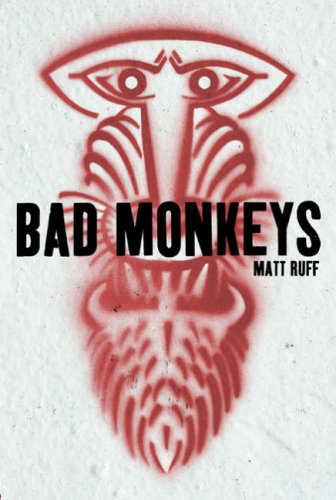
5. What is your favourite book? Bad Monkeys by Matt Ruff; Cinder Edna by Ellen Jackson

6. Do you own an eReader? If so, is it cool? I wish! Not that it would replace my books, but it would be a fun gadget to try out.

7. If you weren’t in library school, what would you be doing RIGHT NOW? Studying and/or working.

8. What is your dream job? Something that allows me to use my knowledge and experience to help others, while learning from those I serve.  Something intellectually stimulating that combines technology and interpersonal skills. Something like…a librarian?

9. What is your dream sandwich? Unfortunately, I am not really a huge sandwich fan.  That being said, and after about a day of pondering, I am going to go with a hot lobster roll from Abott’s in Noank, CT (voted “Best in Connecticut!”).

10. What is your favourite thing about living in Montreal? It’s the first big city I’ve lived in! And, it’s bilingual!

11. Living or dead, who would be at your imaginary potlatch? I have a great interest in genealogy, so I would probably invite many relatives (living and dead). That way, I could learn all about their lives from their points of view.

#15 SIS Kids Are Doing It For Themselves: Meet Emma!

1. Name: Emma Lanza (yes my real name is Emily, you can call me that if you want but it would be weird as you are not my mother)

2. Year: MLIS part-timer year II

3. Stream: Librarianship

4. Hometown: Montreal

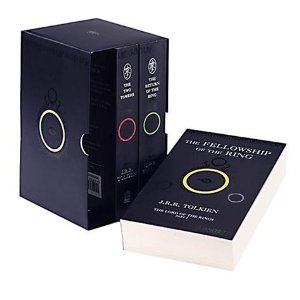
5. What is your favourite book? Tie between The Lord of the Rings and Pride & Prejudice (I represent two very distinct types of woman)

6. Do you own an eReader? If so, is it cool? iPad. For. The. Win. (that being said I use it mainly for note-taking and scrabble playing, but the Vanity Fair subscription is pretty cool)

7. If you weren’t in library school, what would you be doing RIGHT NOW? Still working at McGill, but in my old job. Writing profusely grateful letters to rich people from the Principal.

8. What is your dream job? TONY Award winning Broadway star

9. What is your dream sandwich? I dislike cold food, so I would go with a nice grilled cheese with …… wait for it…… bacon.

10. What is your favourite thing about living in Montreal? My family. (Awwwwwwwwwwwww)

11. Living or dead, who would be at your imaginary potlatch? Stephen Sondheim, Hugh Jackman, Colin Firth AS Mr. Darcy, Jon Stewart, Katharine Hepburn, Kristin Chenoweth and Buffy the Vampire Slayer

#14 SIS Kids Are Doing It For Themselves: Meet Kylie!

1. Name: Kylie Szymesko

2. Year: First

3. Stream: Knowledge Management

4. Hometown: Winnipeg, Manitoba

5. What is your favourite book? This generally changes every few years, but right now it’s a tight tie between ‘House of Leaves’ by Mark Z. Danielewski and ‘Come, Thou Tortoise’ by Jessica Grant. Both of which I believe everyone should read!

6. Do you own an eReader? If so, is it cool?  No, maybe someday. I just really love being able to show off my books on a shelf. Sadly, said books are back in Winnipeg.

7. If you weren’t in library school, what would you be doing RIGHT NOW?  I would have stayed in the Winnipeg Public Library system and moved up the employment ladder until the point where I would no longer be promoted due to the lack of an MLIS. And traveling the world on the side.

8. What is your dream job?  Indiana Jones (or whatever his job title is). My Anthropology teachers told me not to aim to be an Anthropologist like him, so now I’m a librarian aiming to be like him.

Second choice; Pokemon Trainer.

9. What is your dream sandwich? Grill cheese and ham. Made from Monterey Jack cheese and bread and ham from my favourite grocery store in Winnipeg.

10. What is your favourite thing about living in Montreal? That all the necessities are within walking distance!

11. Living or dead, who would be at your imaginary potlatch?  Andrew Davies (screenwriter), Aaron Sorkin (screenwriter), and Oscar Wilde. We’d sit around and engage in terribly witty dialogue.

#13 SIS Kids Are Doing It For Themselves: Meet Caroline!

1. Name: Caroline Gerbaulet-Vanasse

2. Year: II

3. Stream: Librarianship

4. Hometown: Chicago, IL

5. What is your favourite book? “Black Beauty” by Anna Sewell

6. Do you own an eReader? If so, is it cool? No, I do not. While I have no problems reading text from a screen, I much prefer reading “real” books.

7. If you weren’t in library school, what would you be doing RIGHT NOW? Hard to say. Maybe I would have been accepted into a Museology program? Perhaps I would have continued to pursue Psychology? I might also have moved to Stockholm, Sweden to work there and assist my grandmother.

8. What is your dream job? Honestly, that’s a murky question for me these days. When I was little I would have listed out things like large-animal veterinarian, illustrator, author, anything with horses… I think… Speaking for myself right now, my dream would be to find a way to combine a few of my passions into one job. Like if there was a way to combine psychology, theatre, and librarianship.

9. What is your dream sandwich? I can’t think of just one. But right now I’m dreaming of a slice of really fresh bread (white or whole-grain), Nutella generously spread, topped with fresh raspberries and/or strawberries.

10. What is your favourite thing about living in Montreal? The friends I have made here so far.

11. Living or dead, who would be at your imaginary potlatch? First off, I’m relieved to see from earlier participants of this survey that I am not the first who has no idea what “potlatch” is. Thankfully I can follow the lead of earlier participants, and can tell you who I would like to invite: Charlie Chaplin, Frank Sinatra, all my favorite living actors and actresses (James McAvoy and Jim Sturgess would both be there, for example), cool animals like Flipper and Lassie and Black Beauty would come too, all my true friends since I was little (and their cute older brothers too), the Phantom (from Phantom of the Opera, poor guy just needs some friends!), and of course I’d like the characters from my favorite books, shows, and movies too. It would be a huge gathering, preferably held (with permission of course) at Rivendell. Book/film/theatre/TV-nerd, and proud of it!

From the brain of Tarquin Peter Steiner

Hey folks. So, this is my first Beyond the Shelf post, and I’m a bit nervous. So I’m going to try and keep it short and sweet. Bittersweet. Well, not too bitter. Listen, just hold your nose, okay? It’ll be over in a second.

We’re all getting wrapped up in the first of our group assignments, and I feel like the true weight of the readings is starting to sink in. We’ve all been told (I’ve been told) by quite a few second-years that the readings aren’t super useful, and often fall by the wayside when we’re performing workload triage. But I’m finding them to be rather integral to writing things like the second assignment in GLIS601 – it’s pretty clear from the way our courses are structured that our readings are designed to be our first sources of citation – though I’m willing to argue the point. To be blunt, the assignments themselves can’t possibly be incredibly informative re: our later lives as professional librarians – this is just the first semester. When going over the rubrics and assignment outlines, I wonder how interested our professors really are in the output of the MLIS Is, and whether or not these assignments are really just chits to prove we’ve done our homework.

I just reviewed what I wrote above, and I realize how pessimistic it sounds. But that’s how I’m feeling about all the make-work. There are broader concepts that students are exploring in their in-class – and out-of-class – groups that can’t be included in the scope of our assignments. And I get the impression that these are concepts that occur to each student, equally, as they pass through the introductory classes – certainly, I’ve talked to some of the upper-years and Ph.Ds about them.

I’m lucky enough to have two graduate students of philosophy in my section of 601 – ex-grads, I suppose. In conversation with Messrs. Tkach and Dinneen, a common theme has developed around our interpretations of models – of information, information-seeking, and information-retrieval, specifically. Namely, a sort of phenomenological gap: see diagram. We all remember examples of this from our high-school days – the octet rule vs. orbital hybridization (chemistry), or tendency to talk about D&D vs. # of friends (life). These are models developed to describe real things that happen in nature – and the models we discuss in class are supposed to describe real observations about information, or the way people interact with it.
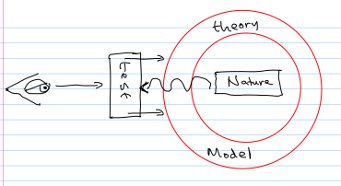
Wherever there is an exceedingly complex entity, or something that is invisible, models are the way to study them. Much can be gained with the help of such models, yet models are not the final word in any science, from social to physical. They are only an intermediate step in the scientific process of investigation. But this is not a thought that is discussed in our courses.

In the hard sciences, there is an implicit understanding that your model is only a representation of a complex entity – and your true commitment, as a professional, is to truth. Thus, scientists tacitly understand that their life’s work will probably amount to the development of increasingly accurate – but never completely accurate – models. However, the flavor of our library sciences courses is much less abstract – and I think it misses that subtle tang of truth. The thesis of our courses, unspoken, is that we will be applying these models to our professional lives, eventually. But it seems clear that as professionals, we will constantly be reconsidering and attempting to refine our own stance on these concepts. Our course assignments ask us to use the models and ideas from our reading, but give us no time to address that central idea. I think that’s kind of a travesty, considering we’ll be devoting our lives to it.

With credit to the University of Oregon.

Okay! That was storytime, now for some details. In cooperation with some other students in the MLIS program, I’ve been running around collecting interviews from Alternative Library coordinators for CKUT’s literary segment. It airs at the asshole end of the morning – 7:30a.m on Mondays. And the segments we’ve been collecting run into the 0.5-1 hour range, whereas CKUT wants 5-10 minute segments. I’ve been getting some pretty incredible stuff out of people who have no previous library training, but are encountering the same problems that we’re being instructed about in our courses – and attacking those problems using DIY solutions that mirror the strategies we’re being taught. You can find the full uncut interviews here, and the first one here. I’m calling it “Behind the Stacks,” but I’d love it if someone could suggest a name that doesn’t sound so dirty. If you’re interested in helping, want to suggest changes to the format – or new places for Behind the Stacks to go once we’re finished with Alternative Library spaces – please leave a message after the beep (in the comments).

Something else that’s not very well addressed in our courses: research. I’ve been talking with a few kids in MLIS I who are a) interested in researching in library science and b) need money to do research. As such, we’ve started up a little research list-serv – a group designed to make us all feel competitive and motivated, as well as inform us of deadlines/calls for papers/grants and granting organizations. We’ve compiled a few megalists of those resources, so if you’re interested in research in archives or libraries (or the dreaded Knowledge Management) leave a comment with your email address, and I’ll add you to the list.

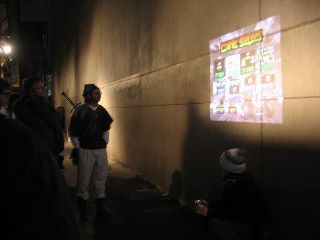
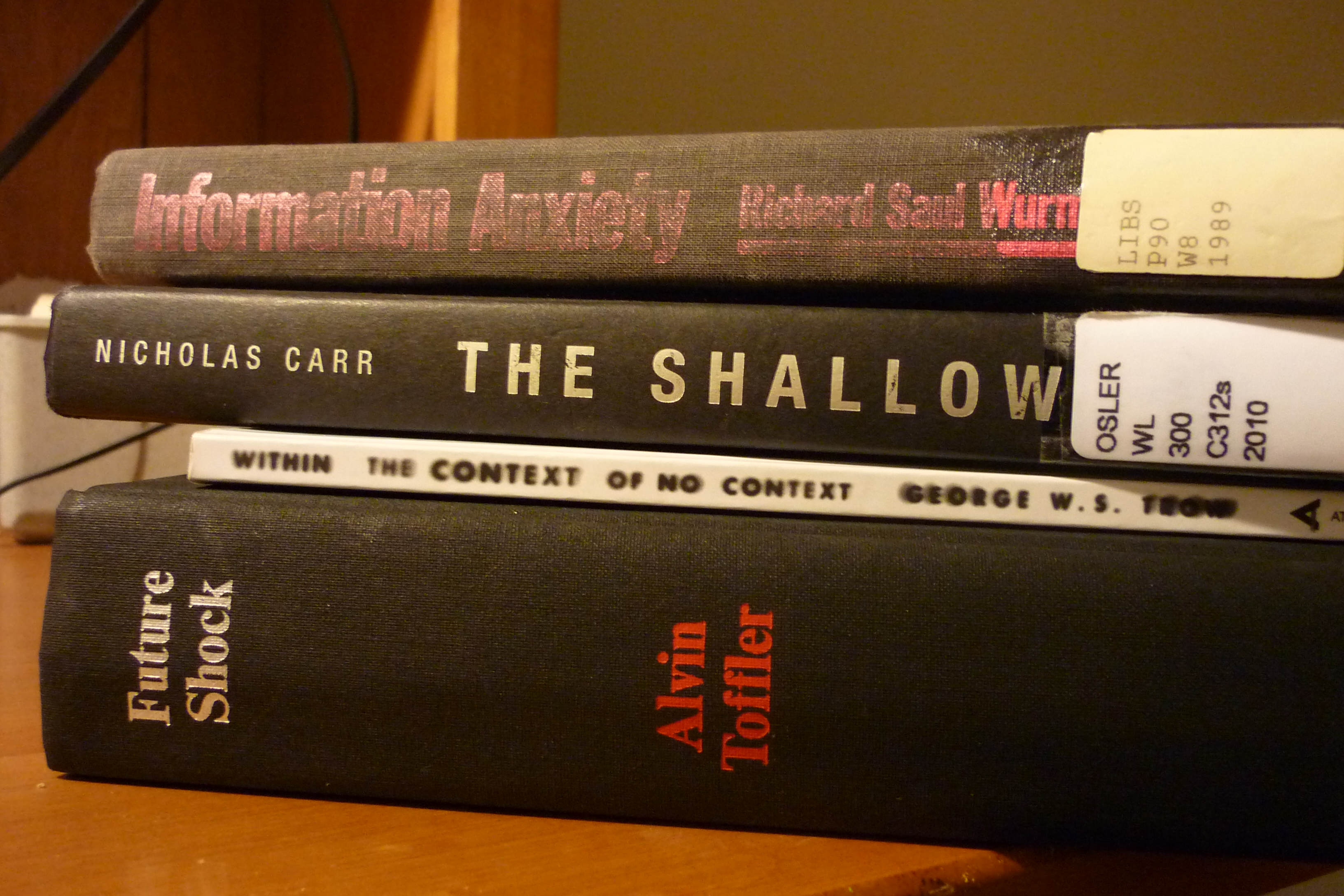
Finally, something fun: many of you know me from the weekly pubnights we’ve been having since the start of classes. We took a break last week to give people a chance to get their fill of POP, but we’re coming back with a vengeance: OUTDOOR VIDEOGAMES, BITCHES. If we get rained-out, we’ll be using a contingency room inside the Education Building, so I’d appreciate it if some experienced A/V nerds could volunteer to help us set up. I’ve run a couple of these events before, and they’re always pretty fun: see pictures below (note: you do not have to come dressed as a dude from Zelda. Please do not come dressed as a dude from Zelda).
#12 SIS Kids Are Doing If For Themselves: Meet Shanna!

1. Name: Shanna Shadoan

2. Year: First

3. Stream: Librarianship

4. Hometown: Choctaw, Oklahoma

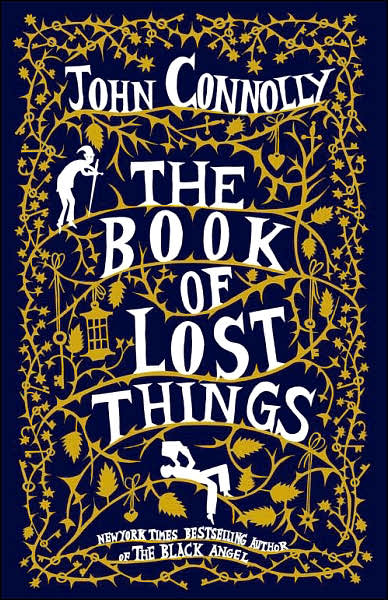
5. What is your favourite book? The Book of Lost Things by John Connolly (if I have to pick only one)

6. Do you own an eReader? If so, is it cool?  I had one, but never used it, so I gave it to my mom.  I like folding corners of pages, and underlining, and notes, and the tactile experience of reading.

7. If you weren’t in library school, what would you be doing RIGHT NOW?  Well, my back-up plans were: llama farmer, hot air balloonist, or mermaid.

8. What is your dream job?  Seriously?  I always thought that being a flower-delivery girl would be awesome, because you get to bring these cheerful messages and make people feel better.  Except that I hate driving.  So, maybe bicycle-floral-delivery-girl?

But then, it’s not very practical, is it? And sometimes I’d have to deliver flowers to funerals, which would be heartbreaking.  So, I’d like to be a Youth Services Librarian, which is pretty much a good-news-sharer, too, right?  Only it’s books instead of flowers that one is sharing.

9. What is your dream sandwich? I love sandwiches! They are my favorite food!  It would be peanut butter with marshmallow fluff and pretzels.

10. What is your favourite thing about living in Montreal?  I love the bike paths and the beautiful parks and the million trillion places to eat and the GIANT McGill library and the fact that the school looks like a castle and all my new friends and my apartment with the colorful walls and the museums and the wide availability of Nutella.

11. Living or dead, who would be at your imaginary potlatch?  I had to look up potlatch. It’s a party, right? A giant, awesome party! Then I want eeeeeeveeeeeeryone there!  Everyone! All of my friends (I’m pretty homesick right now, even if Montreal is awesome) and then a bunch of second-wave feminists (especially Susan Bordo and Judith Butler and Julia Kristeva) and then Jonas Mekas (a filmmaker and champion for people being kind to each other), and Charlie Chaplin (especially him) and Jimmy Stewart, and all of the Muppets.  And lots of cake and a bouncy castle and go-karts. Because wouldn’t Charlie Chaplin and Judith Butler and The Count in a bouncy castle be the best thing ever?

#11 SIS Kids Are Doing It For Themselves: Meet Katarina!

1. Name: Katarina Daniels

2. Year: II

3. Stream: Librarianship

4. Hometown: Montreal

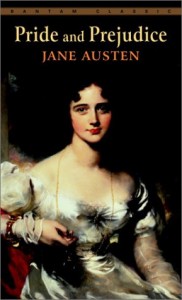
5. What is your favourite book? Pride & Prejudice (I < 3 < 3 < 3 Jane Austen). PS P&P Keira Knightly adaptation = epic fail.

6. Do you own an eReader? If so, is it cool? No, I can’t look at a screen for that long. And I prefer holding books. I’m always worried I’ll drop the eReader because it’s too light/ flimsy.

7. If you weren’t in library school, what would you be doing RIGHT NOW? Law school, if I had gotten my application in on time (though I plan on getting to that soon!) or working at my parents’ travel agency (which I still do, PT)

8. What is your dream job? Working in the McGill Law Library (I think?) or at the McCord Museum. Slash or the Museum of Civilisation if it was in Montreal (< 3 Montreal)! Though I also enjoy working in the travel industry, and getting to take groups around the world 🙂

10. What is your favourite thing about living in Montreal? Hockey season GOHABSGO

9. What is your dream sandwich? Grilled peppers & eggplant with goat cheese. Om nom nom.

11. Living or dead, who would be at your imaginary potlatch? Is it bad that I had to Google “potlatch”? Get ready for a super random potlatch: James Dean, Jane Austen, Eleanor Roosevelt, Grace Kelly, John A. Macdonald, Pierre Elliott Trudeau, Jean Beliveau…  did I have a limit?

#10 SIS Kids Are Doing It For Themselves: Meet Nina!

1. Name: Nina Thurlow

2. Year: II

3. Stream: Librarianship

4. Hometown: Saskatoon, SK

5. What is your favourite book? World Without End – Ken Follett

6. Do you own an eReader? If so, is it cool? Yes, I have a Sony e-reader and it’s probably the best gift anyone has ever given to me (THANKS MOM!) I find that I read way more because it’s much more portable than a book and I don’t have to worry about wrecking the pages or anything and I can get the books with very little effort 🙂

7. If you weren’t in library school, what would you be doing RIGHT NOW? I would have just completed a history master’s and would likely be considering library school because I can’t get a job with a history master’s, while bartending.

8. What is your dream job? Liaison Librarian of either History or Special Collections. 6 weeks vacation. No set hours. Weekends OFF!

9. What is your dream sandwich? Reuben.

10. What is your favourite thing about living in Montreal? Food and shopping.

11. Living or dead, who would be at your imaginary potlatch? My dad.

#9 SIS Kids Are Doing It For Themselves: Meet Jacob!

1. Name: Jacob Siefring

2. Year: First

3. Stream: KM

4. Hometown: Beavercreek, Ohio (outside of Dayton)

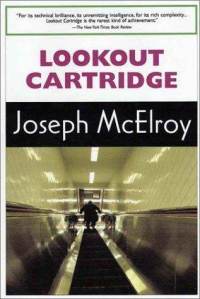
5. What is your favourite book? Lookout Cartridge (Joseph McElroy) is wonderfully weird, though hard to get through; otherwise, Sebald, Gaddis, Barthelme, Gass (In the Heart of the Heart of the Country) – these authors top my list.

6. Do you own an eReader?  Not yet, but I’m excited about making full use of my extensive list of Project Gutenberg bookmarks (soon). I’ll probably start with Rem Kolhaas by Kleist.

7. If you weren’t in library school, what would you be doing RIGHT NOW?  Teaching, or working on another degree, or obsessively reading; or writing.

8. What is your dream job? Knowledge/content manager; or librarian.

9. What is your dream sandwich? Cucumber – tomato – hummus – falafel.

10. What is your favourite thing about living in Montreal? Urban decay, architecture, our little mountain.

11. Living or dead, who would be at your imaginary potlatch? Molière, Apollinaire, Jacques Brel, Gaston Miron.

« Older Entries | Newer Entries »
Blog authors are solely responsible for the content of the blogs listed in the directory. Neither the content of these blogs, nor the links to other web sites, are screened, approved, reviewed or endorsed by McGill University. The text and other material on these blogs are the opinion of the specific author and are not statements of advice, opinion, or information of McGill.